


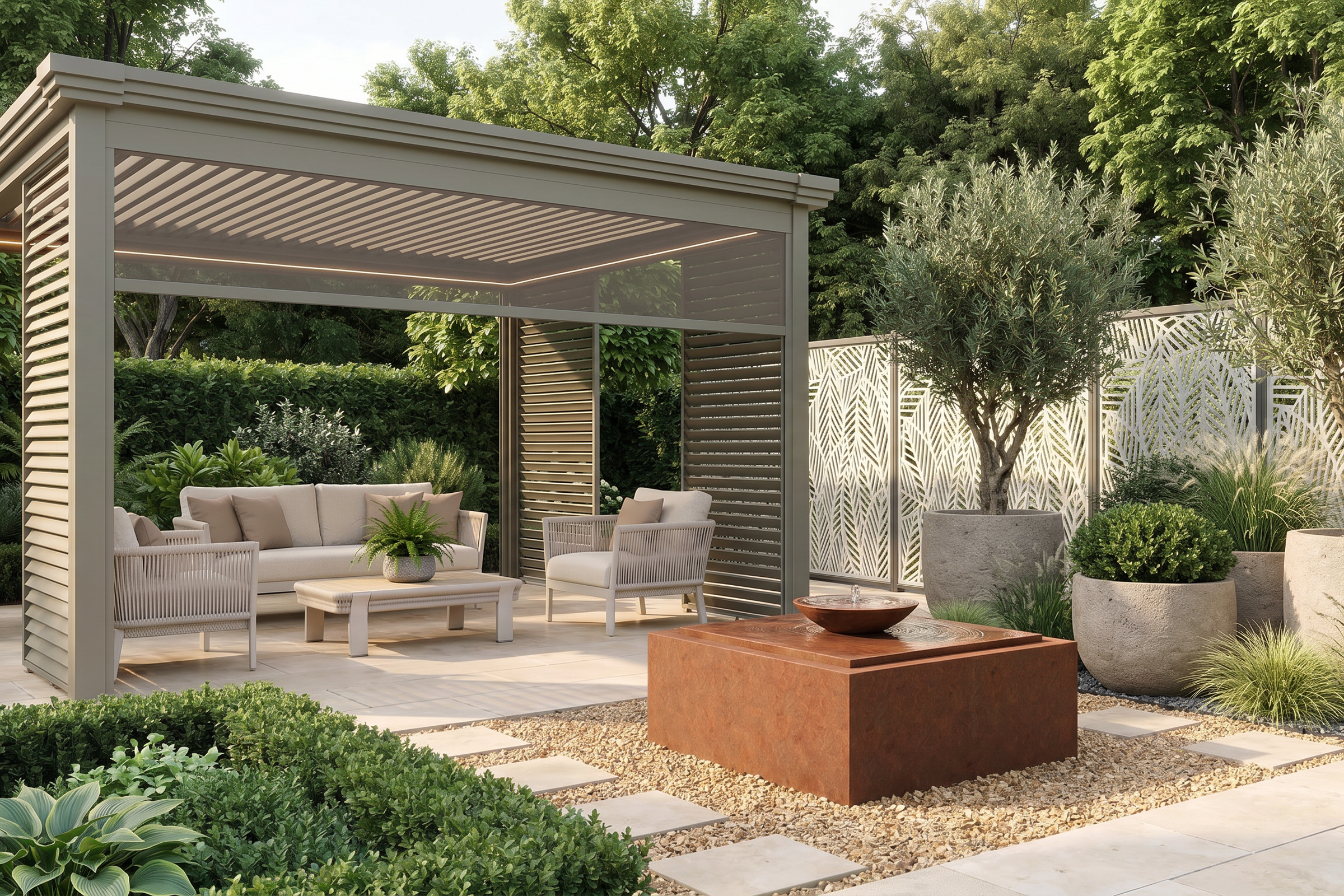
In a world of constant notifications, busy schedules and endless scrolling, it’s no surprise that more people are looking to their gardens as places to slow down.
National Simplicity Day, taking place every year on the 12th July, is a reminder that sometimes less really is more. Originally inspired by Henry David Thoreau’s philosophy of intentional living, the day encourages us to step back the unnecessary and focus on what truly adds value to our lives.
The same principle applies to outdoor spaces. A minimalist garden isn’t about empty spaces or removing personality. Instead, it’s about creating an environment that feels calm, considered and easy to enjoy every feature has a purpose, every material earns its place, and the result is a garden that brings a sense of peace rather than visual noise.
If you’re looking to embrace a simpler approach to outdoor living, here are five ways to create your own minimalist retreat.
Stick to a Simple Colour Palette
One of the easiest ways to create a sense of calm is through consistency. Minimalist gardens tend to favour a restrained colour palette, allowing materials, planting and textures to do the talking. Think soft greys, warm neutrals, charcoal tones and natural greens.
Rather than introducing lots of contrasting colours, focus on a handful of shades that work together harmoniously.
Anthracite fencing, contemporary gates and neutral planters create a timeless foundation that can evolve with the seasons without ever feeling overwhelming. The result is an outdoor space that feels cohesive, elegant and effortlessly modern.

Invest in Fewer, Better Features
Minimalism doesn't mean having less for the sake of it, it means choosing quality over quantity. Instead of filling a garden with multiple decorative elements, focus on a few statement pieces that will stand the test of time.
A beautifully designed driveway gate, a pair of oversized planters or a decorative screen that creates subtle separation between spaces can have far more impact than numerous smaller accessories competing for attention.
Thoughtful investment pieces bring structure and longevity to a garden, allowing the overall design to feel intentional rather than cluttered. When every element serves a purpose, the space naturally feels calmer.
Let Planting Create Texture
Minimalist gardens still rely heavily on planting, but the approach is more curated than colourful. Rather than large collections of different species, consider repeating a smaller number of plants throughout the space. This creates rhythm and visual consistency while making the garden easier to maintain.
Popular choices include ornamental grasses, lavender, olive trees, box topiary, evergreen shrubs, and white flowering perennials.
The focus shifts from bright colour combinations to texture, movement and structure. Tall grasses swaying in the breeze or the silvery leaves of an olive tree often provide allt he visual interest a space needs.
Create Privacy Without Closing Off the Garden
A sense of retreat is essential in any calming outdoor space. However, complete enclosure can sometimes make gardens feel smaller or darker than they need to be.
Decorative screens offer an elegant solution. They provide privacy and define different areas while still allowing natural light and airflow to move through the space.
Used thoughtfully, they can create quiet corners for reading, separate dining areas from planting zones or simply introduce another layer of texture and pattern into the garden. The shadows they cast throughout the day add subtle interest without overwhelming the overall design.
It's a perfect example of functionality meeting simplicity.

Design for How You Actually Live
Perhaps the most important principle of minimalism is intention. Before adding anything to your garden, ask yourself a simple question: will this genuinely improve how I use the space?
For some people, that might mean a comfortable seating area for morning coffee. For others, it could be a large dining table for entertaining family and friends.
A minimalist garden isn’t about following trends or creating something that looks perfect in photographs. It's about designing an environment that supports your lifestyle and makes everyday moments more enjoyable.
When every feature has a reason for being there, the garden naturally feels more relaxing.

Simplicity is About Creating Space to Enjoy
National Simplicity Day offers an opportunity to rethink hat we really want from our outdoor spaces.
Rather than chasing every new trend or filling every corner, there’s something incredibly refreshing about stepping back and focusing on the essentials: quality materials, timeless design, thoughtful planting, and spaces that invite us to slow down.
Ultimately, the most beautiful gardens aren’t always the busiest ones. More often than not, they’re the spaces that allow us to pause, breathe and simply enjoy being outdoors.


