


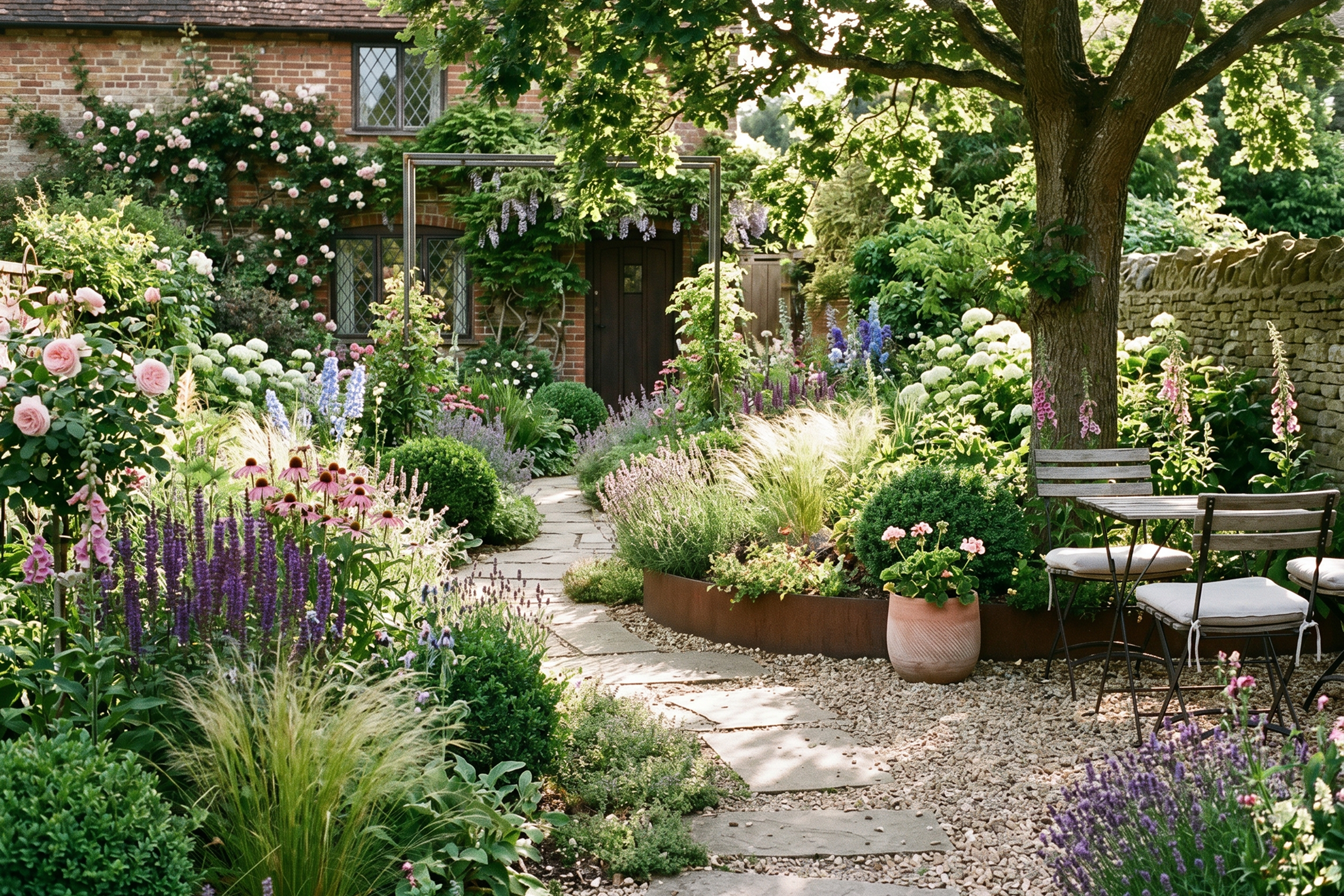
Over the last five years, our gardens have transformed dramatically. What was once considered a “finished” outdoor space often looked very different to what we aspire to today. Back then, the focus was largely on neatness, low maintenance, and appearance alone. Now, gardens are expected to do much more. They’ve become places for wellbeing, connection, entertaining, and everyday living.
As we celebrate out fifth birthday, it feels like the perfect moment to reflect on how our outdoor spaces have evolved, and how our relationship with our gardens has changed alongside them.
From Perfect Lawns to Purposeful Wild Beauty
For years, the ideal garden was often centred around the perfect lawn. Crisp stripes, minimal planting, and tidy borders were seen as the gold standard. But recently, we’ve seen a huge shift towards softer, more naturalistic planting schemes that support wildlife and bring movement and texture into the garden.
Today’s gardens are less about perfection and more about purpose. Pollinator-friendly planting, layered borders, ornamental grasses, and water features have become increasingly popular as homeowners look to create spaces that feel immersive and alive. Gardens are no longer just something to look at from the kitchen window, they’re spaces designed to be experienced.
The rise in wildlife-conscious gardening has also changed the way people think about outdoor design. Features such as water bowls, bee-friendly flowers, and habitat planting are now intentionally incorporated into even the most contemporary spaces.

From Stripped-Back Minimalism to Reconnecting With Nature
Minimalist gardens dominated trends for years, with expansive paving, decorative stone, and sparse planting creating clean but often clinical spaces. While contemporary design is still hugely popular, there’s been a clear move towards balancing structure with softness.
People now want gardens that feel calming and restorative. Rich planting schemes, natural materials, and sensory elements have become just as important as clean lines and modern finishes. Water features, in particular, have grown in popularity for the atmosphere they create, bring movement, reflection, and sound into the space.
Following years where many of us spent more time at home, gardens became somewhere to slow down, switch off, and reconnect with nature. That change in mindset has had a lasting impact on outdoor design.

From Looking Good to Feeling Good Too
Perhaps the biggest shift over the last five years is that gardens are no longer designed purely for aesthetics. Homeowners are now considering how their outdoor spaces make them feel.
Gardens have become extensions of the home. Spaces for hosting friends, sharing meals, unwinding after work, or simply spending more time outdoors. Privacy screens, decorative panels, ambient lighting, and zoning solutions are increasingly being used to create atmosphere and comforts, not just visual appeal.
Outdoor spaces are now expected to support wellbeing in the same way interiors do. Whether that’s a peaceful morning coffee spot, an entertaining area for summer evenings, or somewhere to escape screens and busy schedules, emotional connection has become central to modern garden design.

From Daytime-Only Spaces to 24-Hour Experiences
Five years ago, many gardens were designed primarily for daytime use. Once the sun went down, most outdoor spaces faded into the background. Now, gardens are being designed to function beautifully from morning through to night.
Integrated lighting has completely changed how people use their outdoor spaces. Soft perimeter lighting, illuminated screens, feature planting, and fire pits allow gardens to feel warm, inviting, and usable long after sunset.
Outdoor buildings have also become increasingly sophisticated. What began as simple garden rooms or storage spaces has evolved into fully designed extensions of the home, used as entertaining areas, home offices, gyms, bars, or peaceful retreats.
The idea of “outdoor living” has become exactly that: living outdoors, not simply sitting in the garden occasionally.

From “The Garden” to Luxury Outdoor Living
One of the most noticeable changes in recent years is how cohesive outdoor spaces have become. Rather than treating patios, fencing, storage, and planting as separate elements, homeowners are now designing gardens holistically.
Decorative screens, coordinated planters, outdoor kitchen, pergolas, and premium composite materials have helped elevate gardens into true lifestyle spaces. There’s a growing desire for gardens to feel curated and considered, with the same attention to detail as interior design.
People are investing more into creating outdoor environments that feel luxurious but liveable, spaces that can adapt to everyday family life while still feeling beautifully designed.

Looking Ahead
As we celebrate this milestone, it’s incredible to look back at how much outdoor living has evolved in such a short space of time. Gardens have become more personal, more intentional, and far more connected to the way we live day to day.
The trends may continue to evolve but one thing is clear: outdoor spaces are no longer an afterthought. They’ve become an essential part of the home, designed not just to look beautiful, but to enhance how we live, feel, and connect.
And if the last five years have taught us anything, it’s that the best gardens aren’t necessarily the most perfect. They’re the ones that make us want to spend more time outside.


