


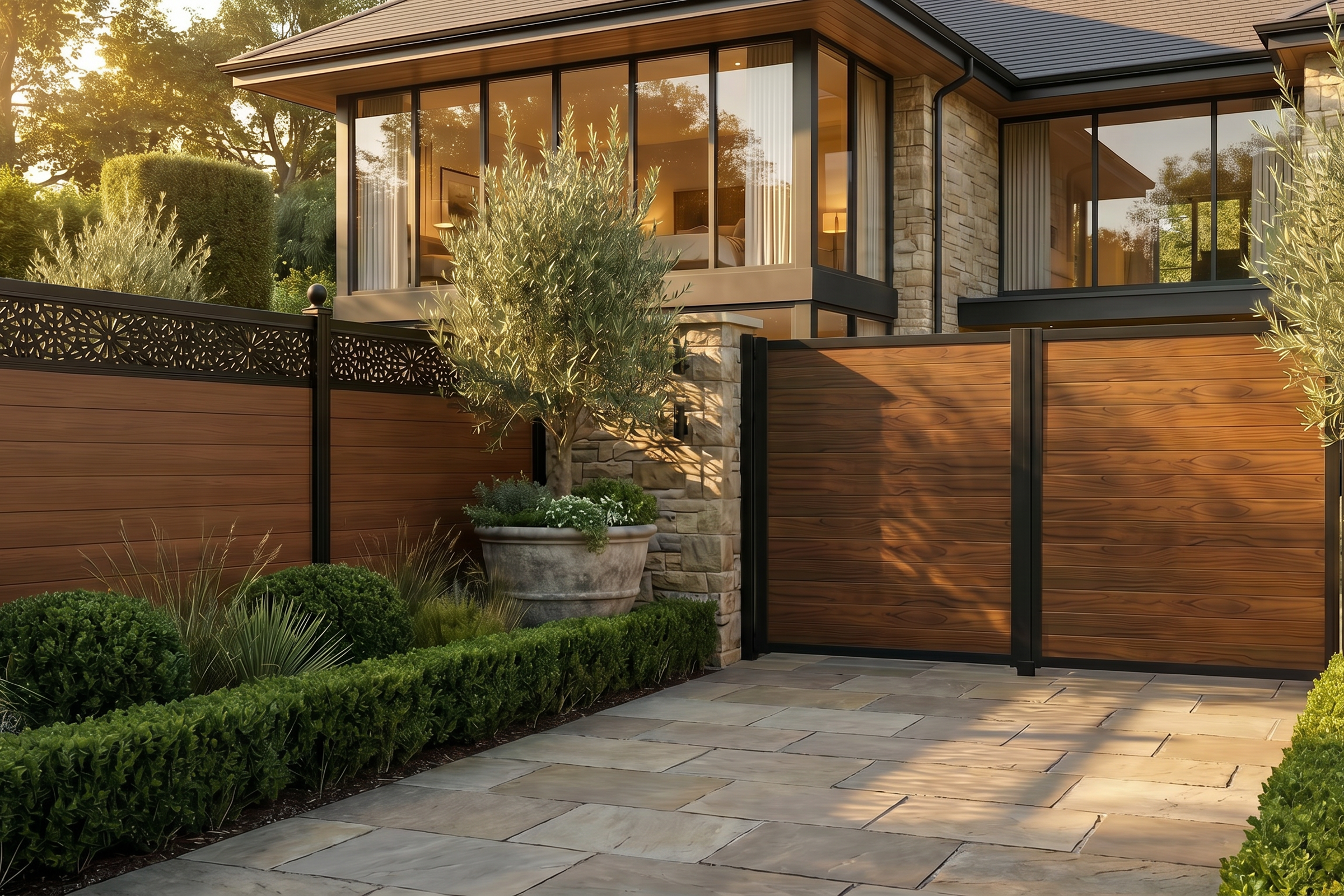
A driveway gate does far more than mark the entrance to your property.
It’s one of the first things visitors notice, a key element of your home’s kerb appeal, and an important investment in both privacy and security. The right gate should feel like a natural extension of your home, complementing its architecture while meeting the practical needs of everyday life.
But with so many styles, materials and configurations available, knowing where to start can feel overwhelming.
Whether you’re replacing an existing gate or choosing one for a brand-new project, here’s everything you need to consider before making your decision.
Start With the Purpose of Your Gate
Before looking at colours or styles, it’s worth asking a simple question: what do you want your driveway gate to achieve?
For some homeowners, security is the priority. Others are looking to create more privacy, keep children or pets safely enclosed, or simply elevate the appearance of their property.
In many cases, it’s a combination of all four.
Understanding your priorities from the outset will help narrow down the options and ensure you choose a gate that works both practically and aesthetically.

Consider the Style of Your Home
Your driveway gate should complement your property’s character rather than compete with it.
A sleek, contemporary home often suits clean lines, minimalist detailing and horizontal slats, while period properties may benefit from more traditional designs and softer architectural features.
The goal isn’t necessarily to match every detail exactly, but to create harmony between your home and its entrance.
Think about:
- Existing fencing and boundary treatments
- The colour palette of your property
- The style of your front door and windows
- The overall character of the surrounding landscape
A well-chosen gate feels intentional, almost as though it has always belonged there.

Swing Gates or Sliding Gates?
One of the most important practical decisions is choosing between a swing gate and a sliding gate.
Swing gates remain the most common option for residential properties. They can open inwards or outwards and create a classic, elegant entrance. They're particularly well suited to driveways with ample space and relatively level ground.
They have a traditional appearance and simpler installation, with lower maintenance requirements.
Meanwhile, sliding gates are ideal for homes where space is limited or where steep driveways make traditional swing mechanisms impractical. Rather than opening into the driveway, they move horizontally along a track or cantilever system.
They offer excellent space efficiency and suit modern aesthetics. They’re more secure and can have smooth automated operation.
The right choice ultimately depends on your property’s layout and how you use the space on a daily basis.

Choosing the Right Material
The material you select will significantly impact both the appearance and maintenance requirements of your gate. While aesthetics are important, it’s equally important to consider maintenance, longevity and how much upkeep you’re realistically prepared to take on.
Aluminium
Aluminium has become one of the most popular choices for modern homes, and it’s easy to see why.
Lightweight yet incredibly durable, aluminium, won’t rust, warp or rot, making it perfectly suited to the British climate. It requires very little maintenance beyond occasional cleaning and retains its appearance for years without the need for sanding, staining or repainting.
Available in a wide range of colours and contemporary styles, aluminium offers a clean, timeless finish that works beautifully with both traditional and modern properties.
For homeowners looking for a long-term investment with minimal upkeep, it’s an increasingly attractive option.
Composite
Composite gates combine the appearance of natural timber with the practical benefits of modern materials.
They provide warmth and texture while being far more resistant to weathering and moisture damage than traditional wood. Composite boards don’t require annual treatment and maintain a consistent appearance throughout the seasons.
For those who love the look of timber but want a low-maintenance solution, composite offers an excellent middle ground.
Timber
Timber remains a classic choice and can bring character and charm to certain properties, particularly period homes and rural settings.
However, it does require significantly more maintenance than modern alternatives.
Wood is naturally affected by changing weather conditions. Over time, gates can warp, swell, crack or fade if not regularly treated and protected. Painting, staining and ongoing maintenance become an essential part of preserving both appearance and structural integrity.
While many homeowners still love the natural beauty of timber, others are increasingly opting for aluminium or composite options that deliver a similar sense of style without the long-term upkeep.
When choosing a material, it’s worth considering not just how your gate will look on installation day, but how it will perform five or ten years down the line.

Manual or Automated?
Automation has become increasingly popular in recent years, and it’s easy to understand why.
An automated gate offers convenience, particularly during poor weather or busy mornings when getting in and out of the car multiple times is less than ideal.
Modern systems can be operated using remote controls, keypads, smartphone applications, and intercom systems.
While automation involves greater upfront investment, many homeowners find the added convenience and security well worth considering. If you’re planning to automate your gate in the future, it’s wise to account for this during the initial design and installation process.
Choosing the Right Colour
Colour can dramatically influence the overall appearance of your entrance.
Classic shades such as black, anthracite grey and muted neutrals continue to dominate modern exterior design, offering versatility and timeless appeal.
When selecting a colour, consider existing features around your property, including window frames, front doors, garage doors, fencing, and exterior cladding or brickwork. Creating consistency across these elements help establish a cohesive, considered look.
 Think Long Term
A driveway gate isn’t something most homeowners replace frequently. It's worth thinking beyond immediate trends and focusing on choices that will continue to work for your home in years to come.
Ask yourself:
- Will I still love this design in ten years?
- How much maintenance am I realistically prepares to undertake?
- Does the gate suit potential future improvements to the property?
- Is durability more important than initial cost savings?
Investing in quality materials and timeless design often proves more cost-effective in the long run.

The Right Gate Should Feel Like It Belongs
Ultimately, the best driveway gate is one that feels entirely at home on your property.
It should enhance security without feeling imposing, complement your home’s architecture and provide practical benefits that make everyday life easier.
Whether you prefer contemporary aluminium designs, traditional craftsmanship or something uniquely tailored to your space, taking the time to consider both style and function will ensure your investment stands the test of time.
After all, a driveway gate isn’t simply an entrance, it’s the first impression your home makes, and one you’ll see every single day.


