


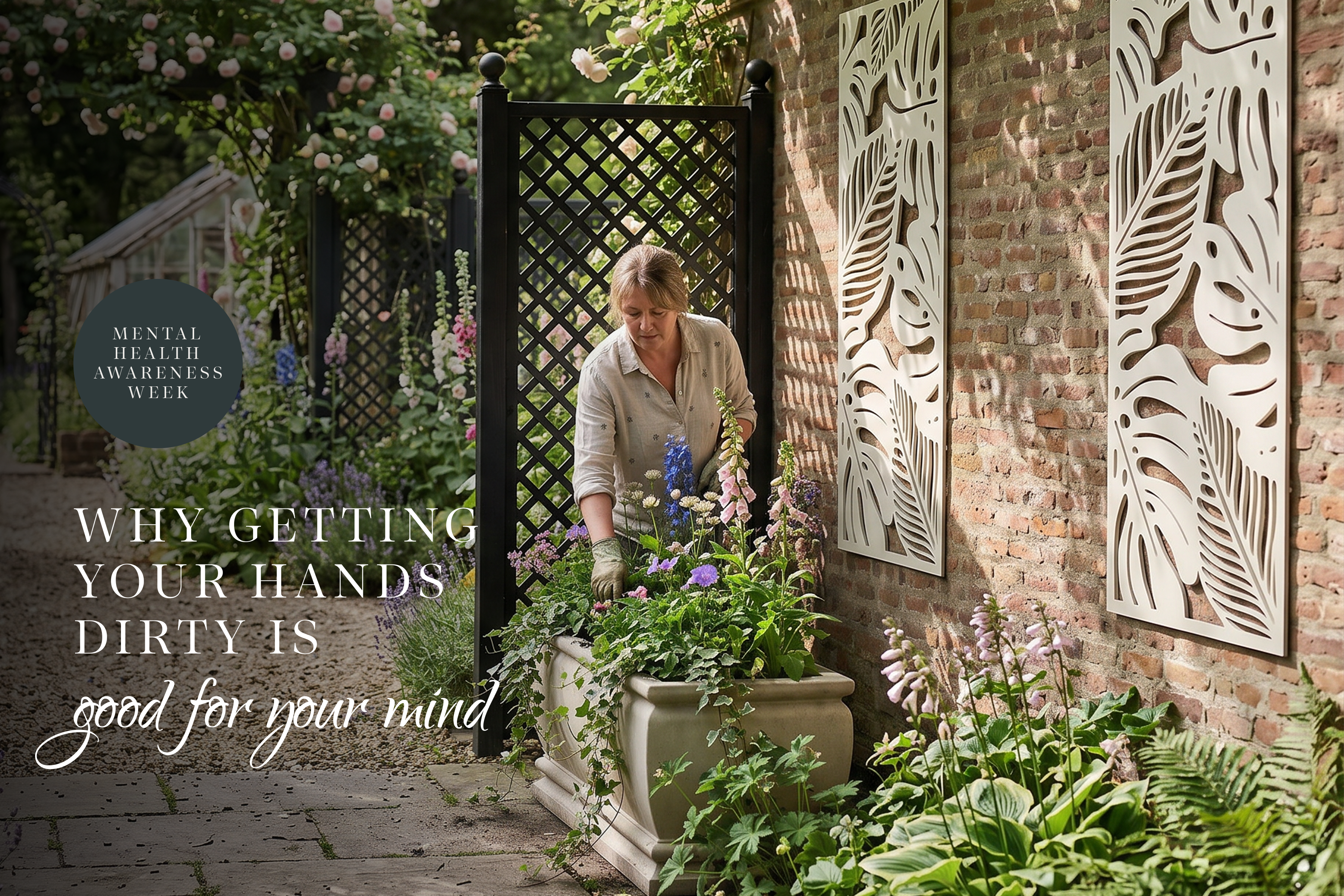
With Mental Health Awareness Week well underway, it feels like the perfect time to talk about the simple everyday habits that can have a real impact on our wellbeing. In a world that often feels fast paced and constantly switched on, many people are searching for ways to slow down and reconnect with themselves.
One of the most effective places to start can often be found much closer to home than we realise.
Whether it’s planting herbs on a balcony, tending to raised beds or simply spending more time outdoors, gardening has repeatedly been linked to improvements in mental wellbeing. And importantly, the research behind it is growing stronger than ever.
Why Gardening Matters More than Ever
Mental health challenges in the UK continue to rise. According to recent NHS data shared by the Mental Health Foundation, more than one in five adults aged 16-64 in England now live with a common mental health condition such as anxiety or depression. (mentalhealth.org.uk)
At the same time, more people are turning towards nature-based activities to help manage stress and improve wellbeing. Gardening sits at the centre of that shift because it combines movement, fresh air, creativity, routine and connection with nature all in one activity.
The Royal Horticultural Society’s 2025 State of Gardening Report describes gardening as “one of the most widespread and meaningful ways people connect with nature”. The report also found that over 34 million UK adults garden regularly. (rhs.org.uk)
Gardening is Proven to Reduce Stress
For many people, gardening offers something that modern life rarely does. Quiet, focus, and slower moments.
Research from the Royal Horticultural Society found that people who garden every day have wellbeing scores 6.6% higher and stress levels 4.2% lower than those who do not garden at all. The study highlighted gardening as a meaningful form of “green exercise”, combining movement, fresh air and connection to nature in a way that positively supports mental health.
This connection between gardening and lower stress levels is something many people naturally recognise in their own lives too.
Nearly two-thirds of UK adults, around 63%, say gardening or spending time in nature helps improve their mental health and makes them feel less stressed.

Why Gardening Helps the Mind Slow Down
Unlike many hobbies, gardening encourages us to be fully present.
Watering plants, pruning, sowing seeds or even weeding naturally shifts attention away from screens, notifications and constant multitasking. There is a rhythm to it that feels grounding.
Gardening also creates visible progress. You nurture something consistently and over time you see it grow. During stressful periods, that sense of purpose and achievement can have a powerful impact on mood and motivation.
Research has also shown that people who spend at least 150 minutes gardening per week, are significantly more likely to report better mental wellbeing compares to those who spend less time gardening.
The Benefits go Beyond the Garden
Part of what makes gardening so beneficial is that it supports mental wellbeing in multiple ways at once.
It encourages movement without the pressure of intense exercise. It increases time spent outdoors, creates routines, and can even strengthen social connection through shared outdoor spaces and community gardening.
In a culture that often celebrates productivity and being constantly busy, gardening offers the opposite. It reminds us that growth takes times and that not everything needs to happen instantly.

Creating Spaces that Support Wellbeing
One of the biggest misconceptions about gardening is that you need a huge outdoor space to enjoy it.
In reality, even small moments of connection with nature can make a difference. A few pots by the front door, herbs on a windowsill or a quiet corner with comfortable seating can still create a calming environment that supports wellbeing.
At Charles & Ivy, we believe outdoor spaces should not only look beautiful, they should feel restorative too. Gardens have the ability to become places where people unwind, recharge and reconnect with themselves away from the pressures of everyday life.
As Mental Health Awareness Week reminds us, wellbeing is often shaped by small habits repeated consistently. Sometimes, getting your hands dirty and spending time outdoors can be one of the simplest and most effective places to begin.
Sources:
· Royal Horticultural Society - https://www.rhs.org.uk/getmedia/d19b07a0-e245-4f97-8a3f-0a4e8a6b8f1a/rhs-wellbeing-benefits-of-gardening-2016.pdf
· Yell / Mind survey findings reported by Horticulture Week – https://www.hortweek.com/63-cent-brits-say-gardening-improves-mental-health/environment/article/1810652
· Royal Horticultural Society / University of Sheffield research - https://www.rhs.org.uk/science/articles/gardening-is-good-for-you


